
How does heat affect workers’ health?
Worker Education: scientific information on heat stress
Burnley Truax, MPH
Heat can be a serious threat to workers. Without proper protections and education for employers and employees, working in heat can cause illness and, in some cases, death. [1, 2] Currently, the federal agency responsible for issuing worker protective policies, Occupational Safety and Health Administration (OSHA), has published the first-ever national heat protection policy, titled “Heat Injury and Illness Prevention in Outdoor and Indoor Work Settings.” OSHA held a virtual public hearing on the proposed rule on June 16 through July 2, 2025. Recordings and official transcripts from these hearing are available on OSHA’s website. Members of the public interested in providing comments can do so through October 30, 2025 on OSHA’s website.
What is heat stress?
Heat stress,” or how hot the body feels, is often measured using the heat index, a combination of temperature and humidity (i.e., how much moisture is in the air). In higher humidity, our bodies can’t sweat as well to cool off, making it feel hotter. [1] The higher the heat index, the greater the risk of illness and injury. [3] Personal characteristics like age, physical fitness, hydration, chronic medical conditions, and use of medications and drugs, can increase or decrease the impact of heat on the body. [1, 3] In extreme heat, people can experience headaches, rashes, cramps, dizziness, exhaustion, and stroke. [3, 4]
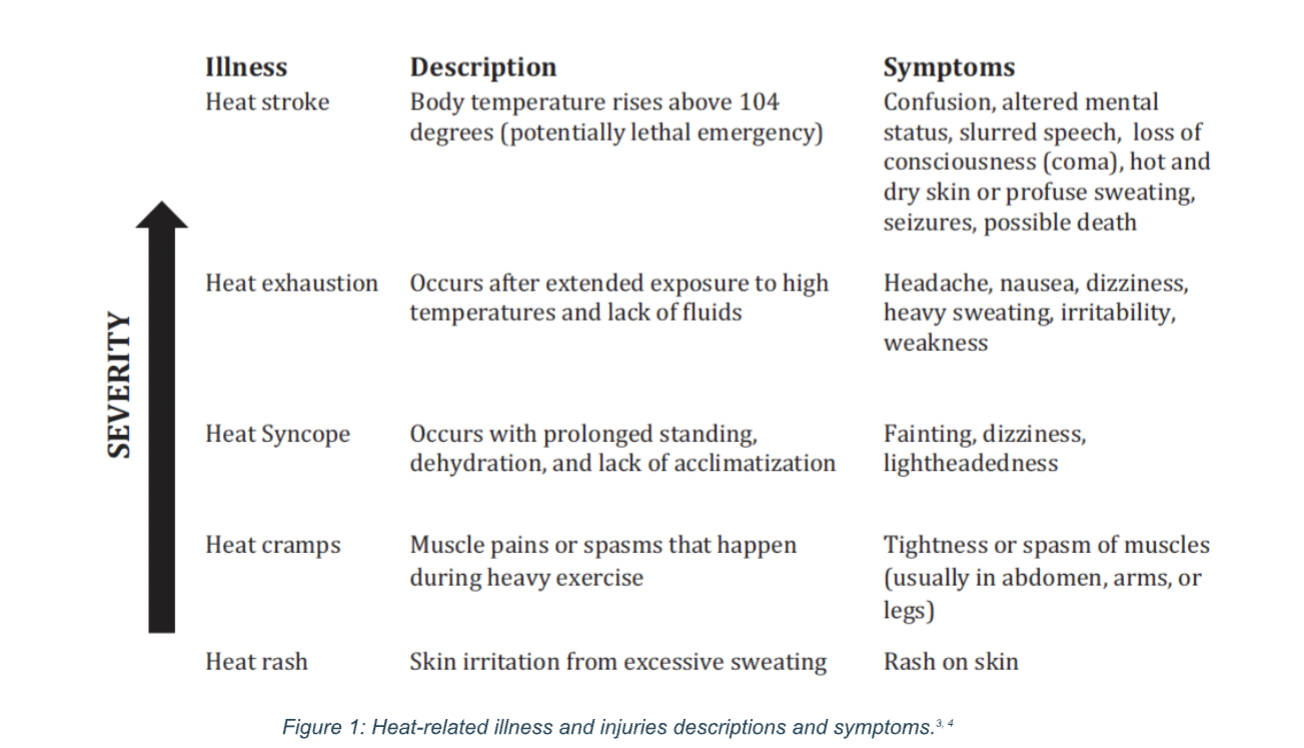
Figure 1 : Heat-related illness and injuries descriptions and symptoms. 3, 4
How are workers affected?
Workers, especially those with physically demanding jobs and extended sun exposure (i.e., working in direct sunlight), experience high amounts of heat stress. Between 2014-2016, 85% of heat-related worker deaths occurred in the construction, agriculture, landscaping, oil and gas, and warehouse sectors. [2] Between 1992-2006, agricultural and crop workers died at an annual rate 20 times greater than the US civilian workforce. [5] Many of these deaths occurred in Southern and Western States with 57% of crop-worker deaths occurring in North Carolina, California, and Florida. [5]
Workers may experience different amounts of heat stress depending on a range of factors: how much direct sunlight they get, how much water they’re drinking, if they’re wearing personal protective equipment (PPE), the thickness and material of their PPE, if they’re using heavy machinery, and how many hours they’re working. [1, 3] Pressure and expectations by employers to finish work can discourage workers from taking rest breaks or drinking water since it could make them at risk of losing their income. [2, 4]
When does heat become dangerous?
Using the heat index to monitor heat stress, researchers have analyzed worker deaths to understand which workers are at risk of illness or death. One study found that 96% of the 418 civilian workforce heat-related deaths occurred at heat index values greater than or equal to 80°F. Almost half (44%) of these deaths occurred at heat index between 91-103°F. [1] Not all deaths occur at high heat indexes. Another study analyzed heat-related worker deaths from 2014-2016 and the heat index on day of death (see Figure 2, below), which showed some deaths occurred on cooler days after long periods of high heat. [2] To effectively provide protection before death becomes a large risk, researchers recommend worker protections should be in place at a heat index of 80°F. [1]
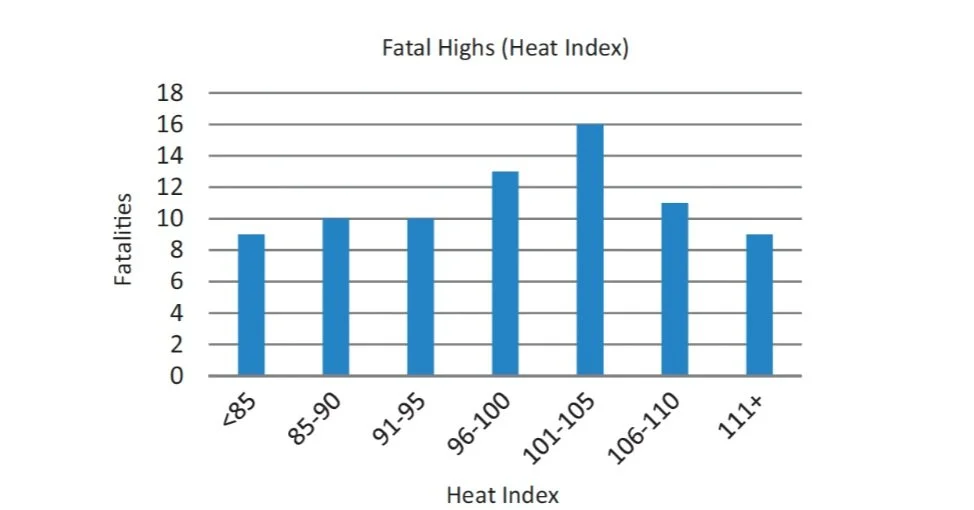
Figure 2 : Heat Index for Worker Fatalities 2014-2016. Note Temperature and humidity from National Climate
Data Center data reported for 12pm on the day of the fatality at the nearest weather station. [2]
What are ways to protect workers?
Heat-related illness and injury are preventable. Several common heat protections can be implemented at the workplace to better protect workers from harmful effects of heat.
Hydration: Easy access to clean water on the job site. Centers for Disease Control (CDC) defines proper hydration as drinking 1 cup [8 oz.] of water or other fluids every 15–20 minutes. [3] Children farmworkers in North Carolina reported their availability to clean water can be inconsistent and at the discretion of their supervisor or employer. [4]
Rest Breaks: Taking frequent rest breaks in shade or AC. [4] Children farmworkers in North Carolina reported that employers rarely provided shaded places to take breaks. Children reported sitting underneath tobacco or blueberry plants to find shade. [4]
Acclimatization: New workers who may not be used to working in hot conditions can undergo a period of “acclimatization,” where theystartwithasmaller workload and gradually progress into full workloadtoacclimateto heat (typically 2-weeks). [3] However, climate change and greater temperature variably may make acclimatization less effective. [2]
Switching Work Tasks: Changing work tasks, such as working in the shade or doing less labor-intense tasks can relieve heat stress. [4] Educating employers and workers about the dangers of heat stress, signs & symptoms, appropriate clothing, and legal protections with culturally and age-appropriate trainings is important for preventing illnesses. [6]
Establish proper enforcement for employers who violate heat standards. [6] Even with emergency heat standards in California, many employers are not in compliance, and responsible for initiating protective measures falls on workers. [6]
References: 1. Maung Z and Tustin AW. The Heat Death Line: Proposed Heat Index Alert Threshold for Preventing Heat-Related Fatalities in the Civilian Workforce. New Solut 2020; 30: 138-145. DOI: 10.1177/1048291120933819.2. Roelofs C. Without Warning: Worker Deaths From Heat 2014-2016. New Solut 2018; 28: 344-357. DOI: 10.1177/1048291118777874.3. Criteria for a recommended standard: occupational exposure to heat and hot environments - revised criteria 2016. 2024. DOI: 10.26616/NIOSHPUB2016106.4. Arnold TJ, Arcury TA, Sandberg JC, et al. Heat-Related Illness Among Latinx Child Farmworkers in North Carolina: A Mixed-Methods Study. New Solut 2020; 30: 111-126. DOI: 10.1177/1048291120920571.5. Heat-Related Deaths Among Crop Workers --- United States, 1992--2006.6. Riley K, Delp L, Cornelio D, et al. From agricultural fields to urban asphalt: the role of worker education to promote California's heat illness prevention standard. New Solut 2012; 22: 297-323. DOI: 10.2190/NS.22.3.e.